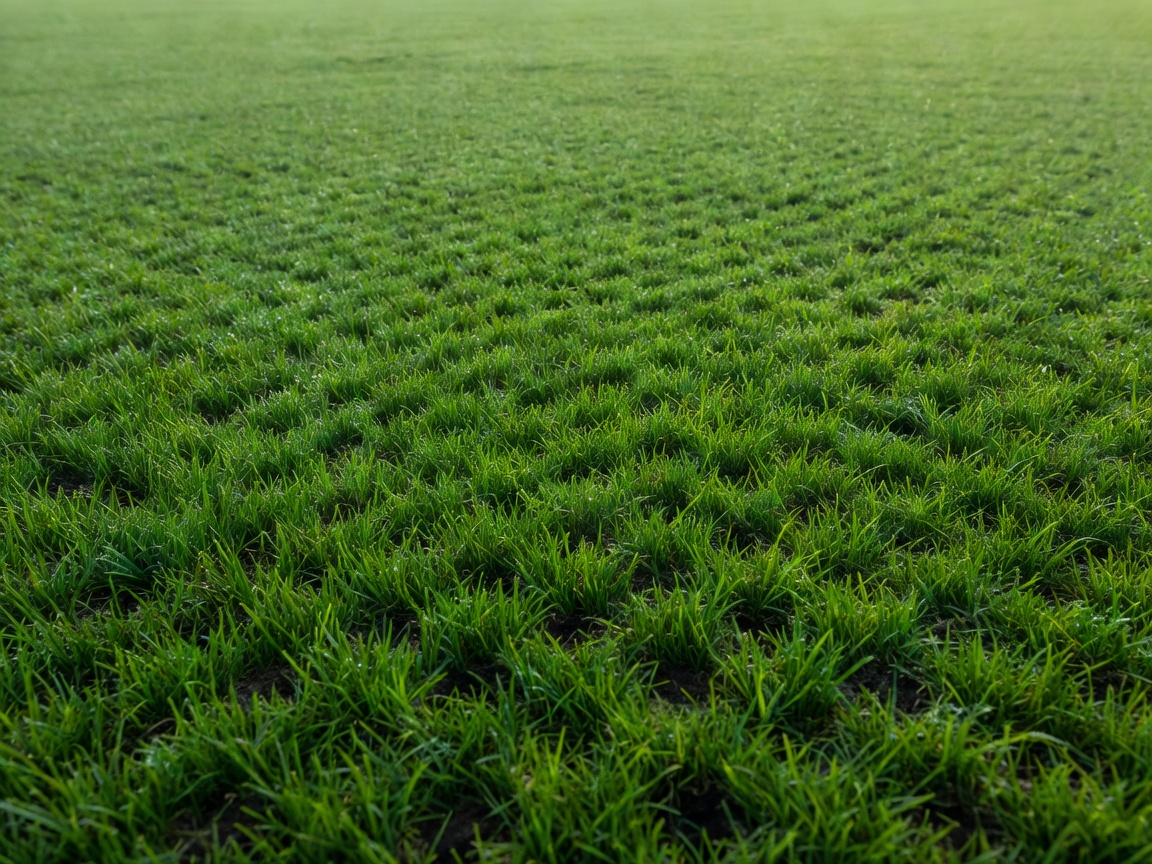
The Rhythm of Healthy Grass
If there's one mistake we see across community clubs and school grounds, it's treating grass like carpet. Natural football turf is a living bio-system. Every stud that sinks into the surface shears leaf tissue, tears roots and compacts topsoil particles together. Without routine relief, you end up with shallow root zones that pull up in clumps the second a winger turns sharply.
Turf care isn't about applying heavy chemicals whenever a yellow patch appears. It’s about building a consistent routine: alternating cylinder mowing directions, ensuring gas exchange through regular spiking, and introducing hardy ryegrass seed cultivars that can tolerate freezing damp in November and baking sun in August.
Core Maintenance Components
1. Cylinder Mowing & Height Regulation
Rotary mowers are fine for rough outfields, but on a match pitch, cylinder mowing is critical. Sharp cylinder blades slice cleanly across the leaf blade rather than tearing it. Tearing stresses the plant, browns the tips and opens up entry vectors for leaf spot and damping off.
During active growing months, cutting frequency must match growth rates—often two to three cuts per week. We maintain bench settings between 22mm and 28mm depending on the season, pitch sand profile, and level of play. Never remove more than one-third of the leaf blade in a single pass.
2. Aeration and Compaction Relief
Roots need oxygen just as much as water. Football traffic concentrates heavy compaction down to 100mm, sealing the upper soil horizon. Slitting and solid-tine aeration break this tension, enabling carbon dioxide to escape and oxygen to feed the microbial rootzone. During dry periods, deep slitting also helps water penetrate rather than running off into the sidelines.
3. Overseeding & Seed-to-Soil Contact
Even the best cared-for pitch loses grass cover across the goal areas and central spine. Overseeding using a dimple or disc seeder places 100% perennial ryegrass blends directly into the slit, protecting new germinating seed from direct boot scuffing and hungry local birds.
Agronomy Note on Thatch Management
A thin layer of organic matter (thatch) provides surface spring and cushions tackles, but once it exceeds 10–12mm, it turns spongy, traps disease spores and holds water like a sponge. Regular light scarification or verticutting prevents this buildup.
Common Turf Maintenance Dilemmas
Grounds managers frequently face difficult trade-offs:
- Appearance vs. Playability: A dark green, heavily fed pitch may look stunning on camera, but excessive nitrogen makes cell walls soft and watery. This leads to weak swards that tear out instantly under rotational stud pressure.
- Mowing Frequency vs. Staff Time: Letting the grass grow long between cuts weakens the base crown. A shorter, frequent cut encourages tillering—lateral shoot development that creates a tight, carpet-like resistance.
- Natural Turf vs. Sand-Rich Constructions: Native soil pitches retain moisture and nutrients well, but turn to porridge under winter rain. Sand-carpet pitches drain quickly, but dry out rapidly and require much tighter irrigation oversight.
When to Call for Specialist Assessment
If your pitch is showing widespread moss accumulation, broad patches that pull up under hand pressure without root resistance, or severe localized black layer (anaerobic, foul-smelling soil beneath the surface), routine mowing will not fix it. A soil test and compaction profile assessment should be conducted before scheduling spring works.