The 24-Hour Matchday Countdown
Routine pitch maintenance builds the engine, but matchday preparation tunes it for peak performance. There is a marked difference between everyday turf management and fixture preparation. On matchday, every task revolves around player safety, surface speed, visual clarity for officials, and compliance with league standards.
1. Final Pre-Match Cut & Striping Pattern
The final cut takes place either on the afternoon prior or the morning of the match. Running the cylinder mowers perpendicular or in distinct alternating light-and-dark 5.5-metre bands is not just for aesthetic appeal—it assists assistant referees in judging offside decisions accurately. Rollers on the cutting units gently press the leaf blades forward or backward, reflecting ambient sunlight to produce clean visual stripes without damaging leaf tissue.
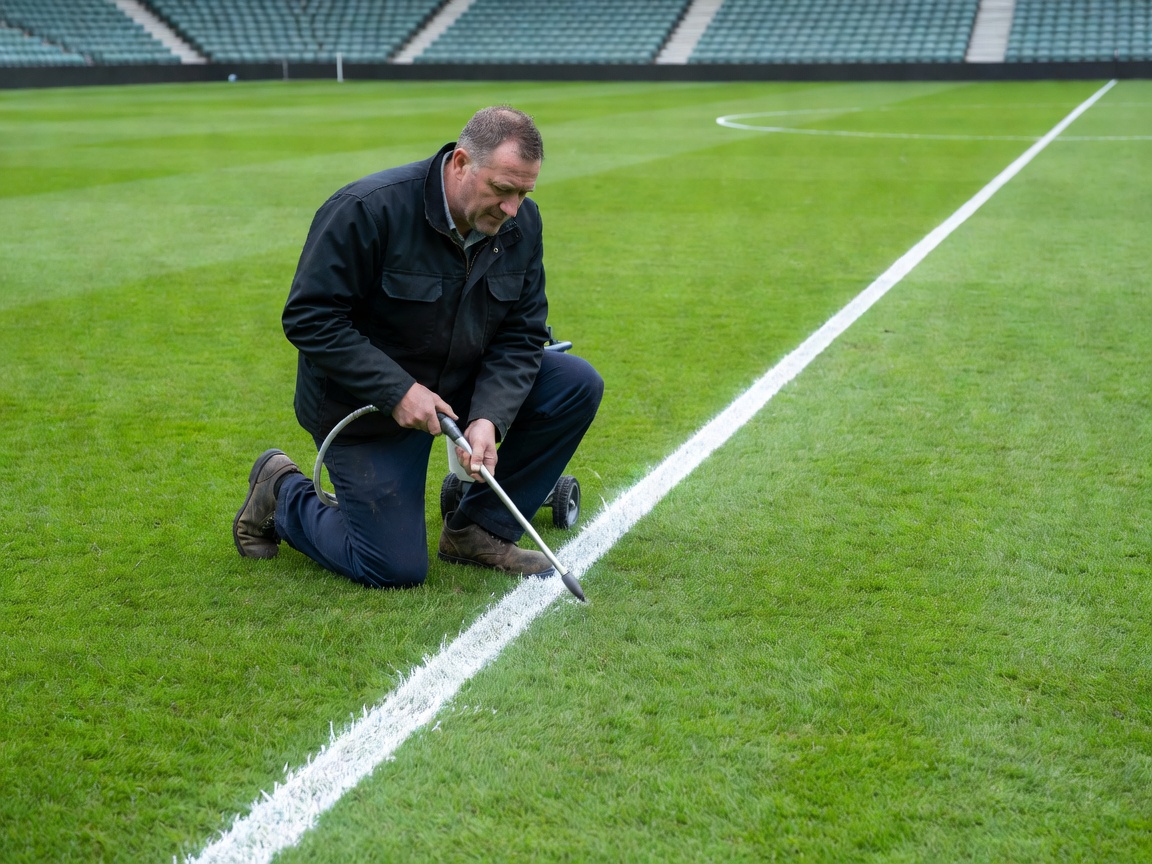
2. Precision Line Marking
Whether using a traditional transfer-wheel marker or a modern laser/GPS spray rig, crisp, straight lines define the professional atmosphere of any ground.
- Paint Formulations: We use water-based, highly concentrated emulsion pigments with natural binders that adhere to the grass leaf without burning or stunting crown growth.
- Line Width: Regulation lines must not exceed 12 centimetres (5 inches) in width, and lines must be equally wide across the field of play.
- Squaring the Pitch: Regular checks using the 3-4-5 geometric rule ensure corners remain true 90-degree right angles across the season.
3. High-Wear Zone Stiffening
The goalmouths, penalty spots, and assistant referee running paths experience three times the wear of the wide midfield channels. Prior to kickoff, grounds staff inspect these zones for loose hollows, firming them with hand rammers or pedestrian rollers, and lightly applying sand-seed mix to divots left from warm-ups.
Matchday Slicking: When & Why
A light, fast irrigation pass 45 to 60 minutes before kickoff lubricates the grass leaf blades. This increases ball roll speed and allows passes to skim smoothly across the turf without slowing down. However, slicking should only be performed on pitches with high sand profiles and robust drainage; slicking a native soil pitch can turn it into a skating rink.
Post-Match: The Golden Hour of Divot Repair
The groundskeeper’s most critical work begins the second the referee signals full time. A football stud creates a localized rupture, tearing roots and turning sod upside down. If left exposed to the wind and sun overnight, the roots dry out and die within 12 hours.
By sending a team of staff or volunteers across the pitch immediately with divot forks:
- Turn displaced sods right-side up, pressing the exposed green crown back down into the rootzone bed.
- Tread down lifted edges to restore a level playing surface for the next session.
- Dust deep, torn gouges with a seed-and-sand blend to stimulate rapid leaf recovery before weeds colonize the bare patch.