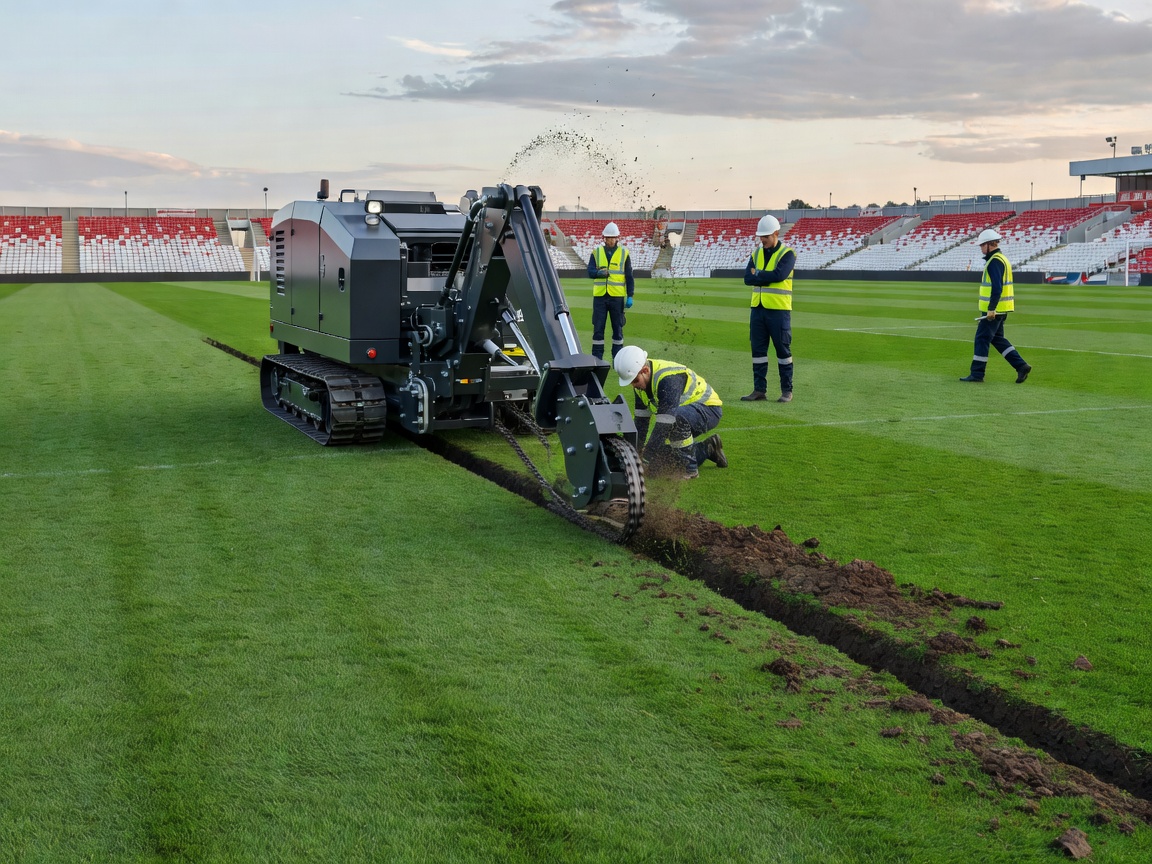
Understanding Why Pitches Waterlog
When a pitch holds water after rain, the immediate assumption is often that "the drains are broken." In reality, more than seventy percent of standing-water problems are surface or near-surface issues rather than pipe collapses. Heavily compacted topsoil forms a dense smear layer in the top 50mm, preventing rainwater from ever reaching the gravel bands and pipe laterals buried 400mm below.
Before recommending invasive civil excavation, grounds professionals diagnose where the blockage lives. If water sits on top while the inspection chambers downstream run dry, the surface needs decompaction and sand banding. If the inspection chambers are backing up with silt and clay, the sub-surface drainage collector pipes need attention.
Drainage Hierarchy: From Surface to Sub-Base
1. Primary Pipe Drainage
Perforated corrugated collector pipes (usually 80mm to 100mm in diameter) installed in trenches backfilled with washed gravel or pea shingle. These act as the master conduits, carrying water away to municipal outfalls, soakaways or attenuation ponds. Depending on soil permeability, these lines are spaced between 3 and 10 metres apart.
2. Secondary Sand Slitting & Sand Grooving
Primary pipes alone are rarely enough on heavy clay or loam soils. Secondary systems—narrow sand slits spaced 200mm to 1000mm apart—cut at right angles across the primary gravel trenches. This creates an immediate bypass highway, letting surface water drain straight down through clean silica sand into the collector network without lingering on the turf.
3. Deep Tining & Decompaction (Verti-Draining)
Heavy machinery pushing solid or hollow tines up to 300mm into the sub-base breaks up pan layers caused by decades of play. The mechanical heave shatters compacted clay horizons, restoring vertical fissures that allow gravity to draw moisture downward.
The Danger of Silt Contamination
Using builder's sand or unwashed loam for pitch top-dressing is a catastrophic mistake. Fine silt particles wash into the sand slits and gravel bands, cementing them shut like concrete. Only washed, angular silica sand matched to rootzone hydraulic conductivity should ever touch drainage paths.
Routine Surface Repairs vs. Capital Civil Works
Knowing whether an issue requires weekly maintenance or major civil investment saves clubs thousands:
- Routine Surface Repair: Hand-forking localized hollows, filling divots with sand/seed mix, shallow slitting and applying wetting agents across high-traffic penalty spots and touchlines. These tasks can be handled between weekend matches.
- Secondary Interventions: Sand banding, gravel injection and deep verti-draining. These are typically carried out once or twice a year during scheduled renovation windows.
- Primary Reconstruction: Full laser grading, new trenching, geotextile membrane installation and pipe replacement. This requires pitch closure and specialist laser trenching machinery.
Long-Term Drainage Maintenance
A drainage system is only as good as its discharge point. Silted headwalls, blocked flap valves, root intrusions and outfall ditches choked with reeds will back water up right onto your penalty spot. Annual flushing of collector pipes with clean water and regular outfall clearing must be part of every club's grounds schedule.