The Science of Uniform Hydration
It's tempting to think of irrigation as just running the sprinklers when the weather gets warm. But on a full-size football pitch (often covering 7,000 square metres or more), minor pressure losses and mismatched nozzles create silent damage. You get dry donut rings around sprinkler heads and flooded swathes in the centre circle.
Uniform water distribution is the cornerstone of steady grass growth. When water delivery varies across zones, your mowing heights, root depths and stud traction vary too. Players notice the difference when sprinting from a firm flank into a dead, water-softened midfield patch.
Irrigation Planning Principles
1. Distribution Uniformity & Sprinkler Overlap
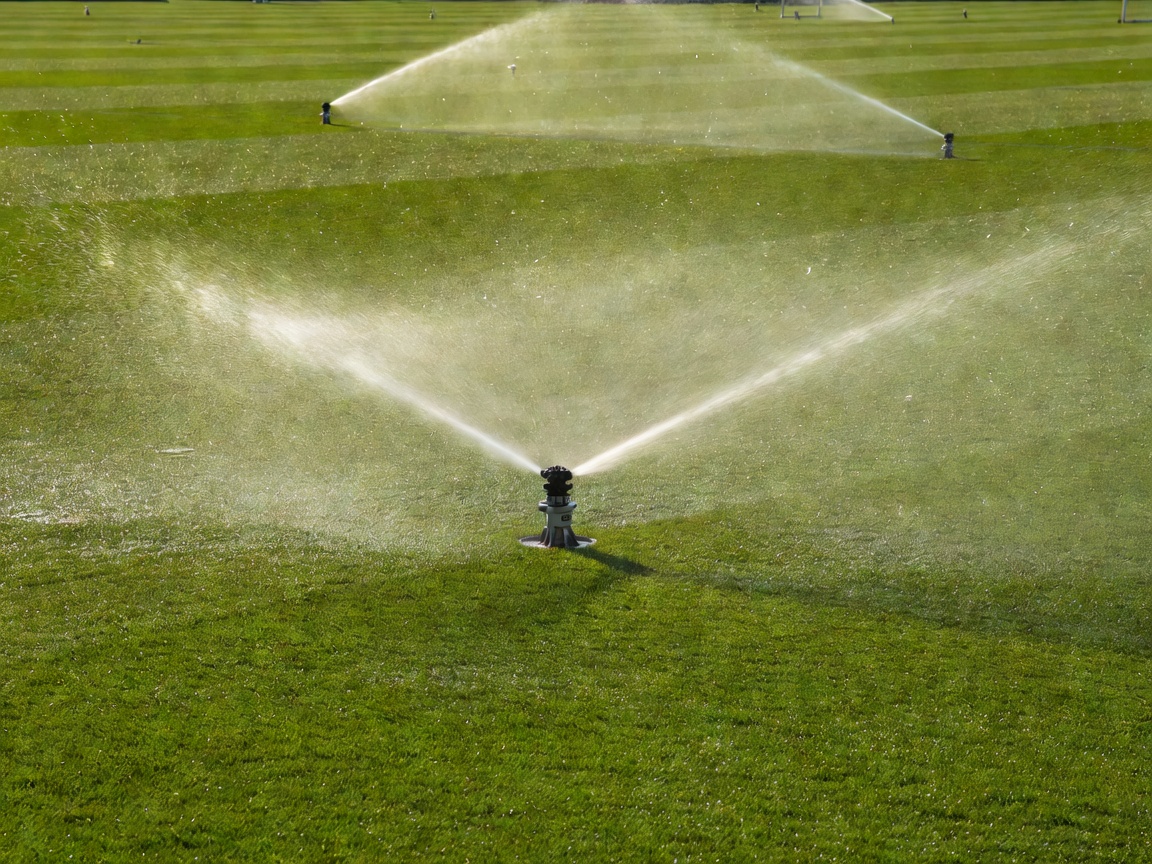
Modern football pitch systems usually rely on either a 13-head or 24-head layout (with perimeter full/half circle arcs and pitch-interior full circle heads). Sprinklers must throw head-to-head—meaning the stream from one head must reach all the way to its neighbour. Without this calculated overlap, wind drift leaves huge dry pockets that turn hydrophobic within days.
2. Deep, Infrequent Watering vs. Light Daily Sprinkles
Light, frequent watering is the enemy of deep roots. If water only penetrates the top 15mm of soil, the ryegrass has no reason to send roots down into the moisture-holding subsoil. We advocate deep watering sessions that penetrate down 100mm to 150mm, followed by letting the surface breathe. This drives root downward growth and builds structural resistance against matchday shear.
3. Managing Evapotranspiration (ET)
Evapotranspiration is the combined volume of water lost through plant transpiration and soil surface evaporation. Rather than running a static timer, modern scheduling adjusts for temperature, wind speed and relative humidity. Running irrigation at night or in the very early dawn reduces wind-drift waste and minimizes evaporative losses before the heat builds.
Watch Out for Hydrophobic Dry Patch
In high sand-content rootzones, fungal by-products can coat sand particles with a waxy organic coating. Water then rolls off rather than soaking in. Recognizing localized dry spots early and applying non-ionic wetting agents can restore downward percolation without drowning surrounding areas.
Practical Irrigation Equipment Checks
Grounds staff should conduct monthly visual and mechanical audits of their water delivery infrastructure:
- Nozzle Wear: Sand particles in recycled or borehole water gradually enlarge brass and plastic nozzle orifices, dropping system pressure and ruining distribution patterns.
- Valve Solenoids & Pressure Regulators: Stuck solenoids can result in stuck heads that flood one corner of the pitch overnight while starving the opposite quadrant.
- Head Leveling: Mowers and heavy rollers can push pop-up heads out of true vertical alignment. A sprinkler head tilted just 5 degrees throws half its water into the air and leaves the ground directly behind it bone dry.
Balancing Water Resources and Environmental Limits
With water availability becoming tighter across municipal supplies, grounds teams are relying more heavily on rainwater harvesting lagoons, borehole storage tanks, and precision moisture sensors. Tracking volumetric water content (VWC) ensures you only replace what the turf has actually consumed, saving money and preserving natural resources.